DeepInfra raises $107M Series B to scale the inference cloud — read the announcement

Recently an interesting new model got released. It is called Lzlv, and it is basically a merge of few existing models. This model is using the Vicuna prompt format, so keep this in mind if you are using our raw API. If you are using the OpenAI API we will take care of the prompt formatting for you.
The Lzlv model also got lots of attention on Reddit, and it was tagged as top choice for the 70b category here: https://www.reddit.com/r/LocalLLaMA/comments/17fhp9k/huge_llm_comparisontest_39_models_tested_7b70b/ It seems to have the right balance between creativity and coherence and is a good choice for roleplay use-cases. You can quickly try it out using our web chat ui. If you like the results you can easily integrate it into your application using our APIs.
How to use it
As always you can easily access the model using our LLM APIs. For example using our OpenAI compatible API:
import openai
# Point OpenAI client to our endpoint, get api key: https://deepinfra.com/dash/api_keys
openai.api_key = "<YOUR DEEPINFRA TOKEN>"
openai.api_base = "https://api.deepinfra.com/v1/openai"
# Your chosen model here
MODEL_DI = "lizpreciatior/lzlv_70b_fp16_hf"
chat_completion = openai.ChatCompletion.create(
model=MODEL_DI,
messages=[{"role": "user", "content": "Hello there"}],
stream=True,
max_tokens=100,
)
# print the chat completion
for event in chat_completion:
print(event.choices)
HTTP API
You can also use our lower level HTTP API directly. This will allow you to build your own prompt, and integrate it easily into any application.
curl -X POST \
-d '{"input": "Tell me a joke."}' \
-H "Authorization: bearer <YOUR DEEPINFRA API TOKEN>" \
-H 'Content-Type: application/json' \
'https://api.deepinfra.com/v1/inference/lizpreciatior/lzlv_70b_fp16_hf'
We have both streaming and non streaming APIs available and you can find more details here: https://deepinfra.com/lizpreciatior/lzlv_70b_fp16_hf/api
Cost
This is a 70b model, and it is quite expensive to run. Typically, you need at least couple A100 80GB GPUs to run it, but to get the best performance you need at least 4 high end GPUs. Getting this hardware and setting everything up is quite expensive and time-consuming. Our APIs however are the most cost-effective way to run this model. For 70b models we charge 0.7 USD per 1M input tokens, and 0.9 USD per 1M output tokens. The biggest saving is that you only pay for usage and not the time.
If you need any help, just reach out to us on our Discord server.
 Best GLM-5.3 API Providers in 2026<p>GLM-5.3 is Z.ai’s reasoning model for long-horizon coding and agentic tasks, with a 1M-token context window. Serving it at scale raises practical questions about cost per token, output speed, and how long a request waits before the first answer token arrives. This guide compares nine providers that offer GLM-5.3. Speed and latency figures come from […]</p>
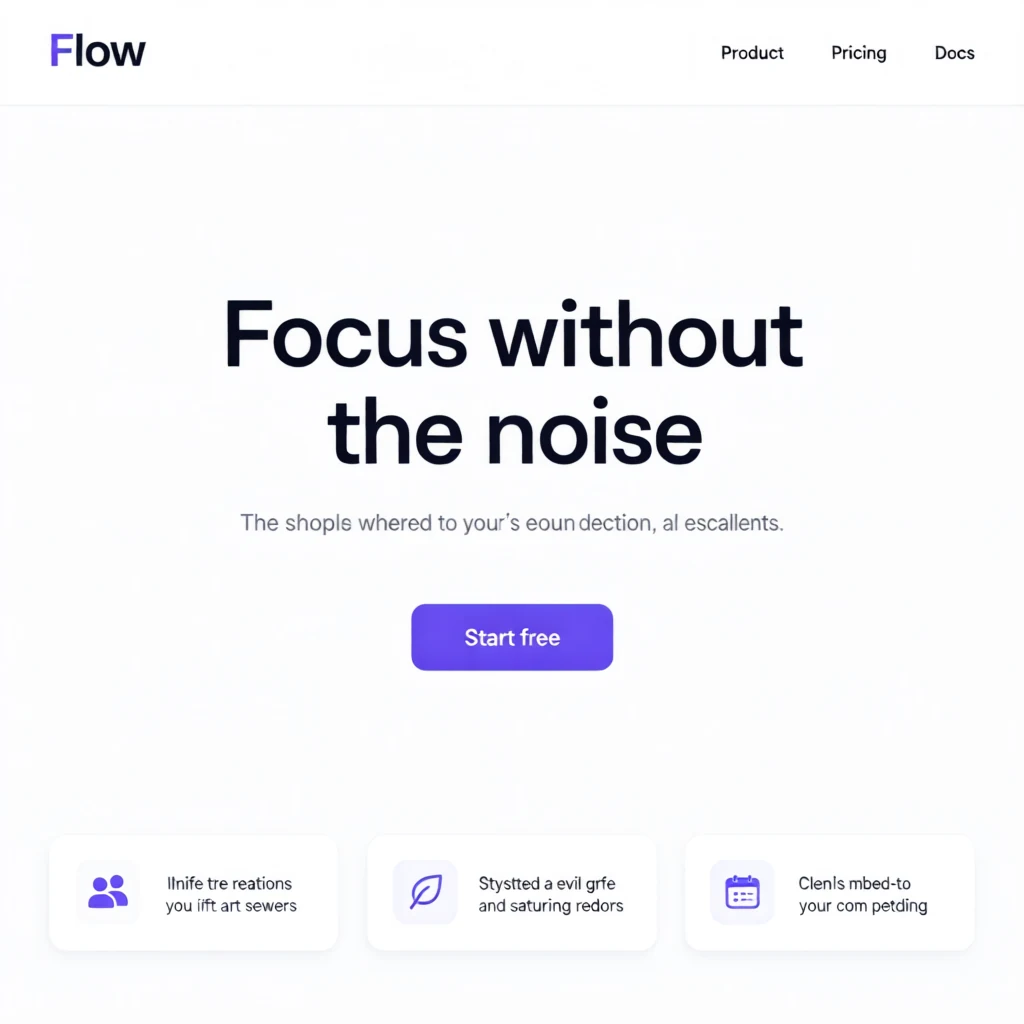 Design Your Next Website With AI: A Prompting Guide for Ming-ImageLearn how to prompt Ming-Image, an open-weight model tuned for UI design, to turn a one-line brief into a real website mockup.
 Qwen3.5 2B via DeepInfra: Latency, Throughput & Cost<p>About Qwen3.5 2B (Reasoning) Qwen3.5 2B is a compact 2-billion parameter open-weights model released in March 2026 as part of Alibaba Cloud’s Qwen3.5 Small Model Series. It employs an Efficient Hybrid Architecture combining Gated Delta Networks (a form of linear attention) with sparse Mixture-of-Experts, delivering high-throughput inference with minimal latency overhead — a significant architectural […]</p>




© 2026 DeepInfra. All rights reserved.