DeepInfra raises $107M Series B to scale the inference cloud — read the announcement
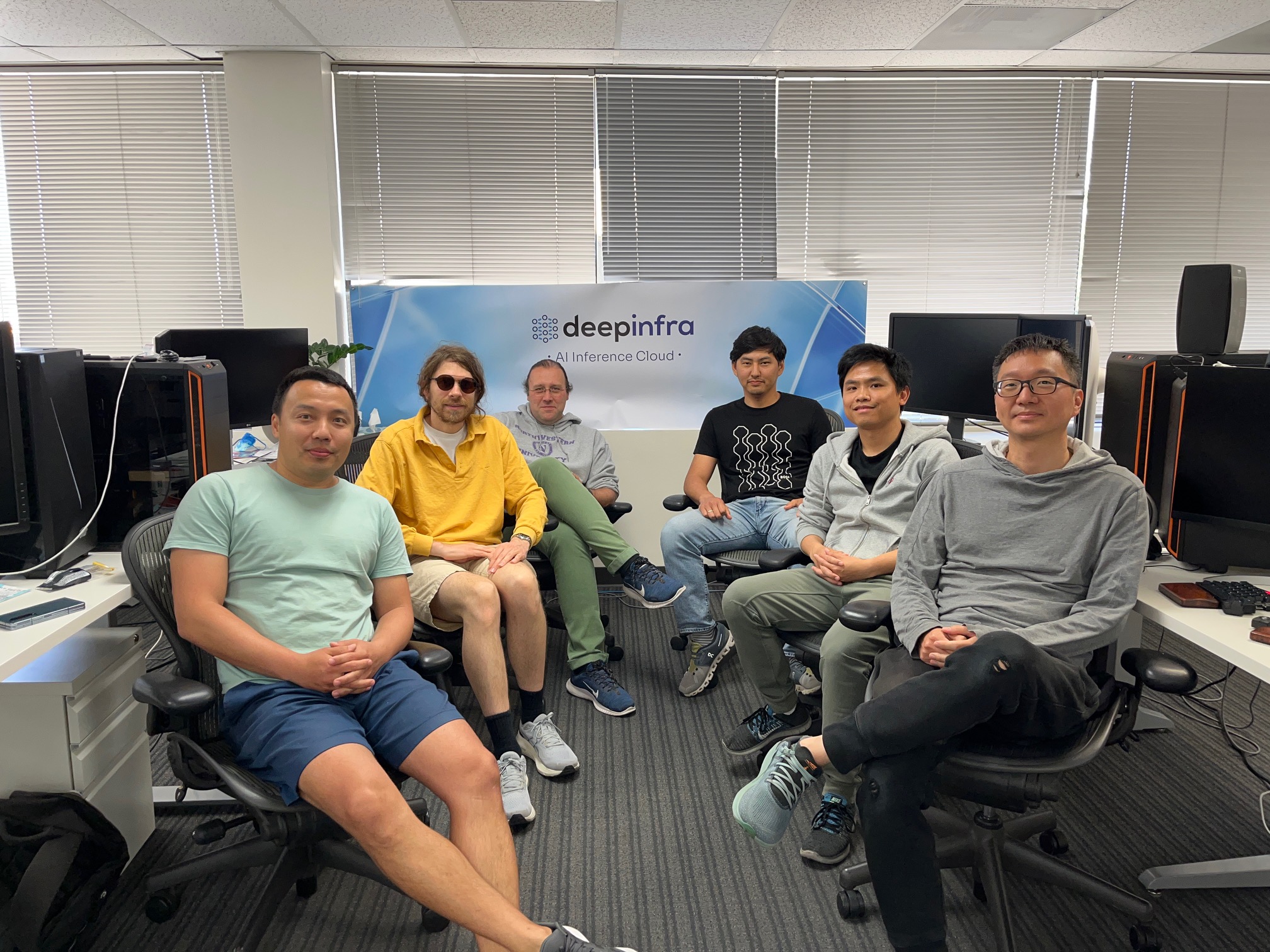
Today we're excited to share that DeepInfra has raised $18 million in Series A funding, led by Felicis and our earliest believer and advisor Georges Harik.
When we founded DeepInfra in 2022, we saw a clear gap: while enormous resources were being poured into training AI models, the infrastructure needed to run these models in production was lagging behind.
The past two years have been a whirlwind. We've scaled our processing volume by over 8,000x since our seed stage. What started as a bet on AI infrastructure has quickly become a critical service for developers deploying increasingly sophisticated models.
Our growth accelerated following the emergence of "thinking models" like DeepSeek. These open source alternatives demonstrated that the innovation cycle in AI was becoming even more rapid than anticipated, requiring significantly more computation during inference.
The reality of deploying modern AI models is challenging for most organizations. Running these models requires significant compute resources, specialized hardware like GPUs that are difficult to acquire, and deep expertise in infrastructure optimization. Most companies simply can't afford the investment or overcome the supply chain challenges to build this infrastructure themselves.
This challenge has shaped our approach from day one. After years of scaling systems to hundreds of millions of users before founding this company, we've developed a set of core principles that guide how we build DeepInfra:
- We believe reliability is non-negotiable when your service powers critical applications. We design for zero downtime because AI infrastructure must be as dependable as the electricity powering your office.
- We've learned that performance creates competitive advantage. Our obsession with fast time-to-first-token and optimal GPU utilization isn't technical vanity – it directly impacts our customers' user experience and cost structure.
- We're convinced that privacy builds lasting trust. Our strict no-logging policy for user prompts isn't just a feature – it's a fundamental commitment to our customers' data sovereignty.
- And we know that deep infrastructure expertise matters at every layer. Understanding the full stack from hardware to application allows us to deliver superior performance while controlling costs.
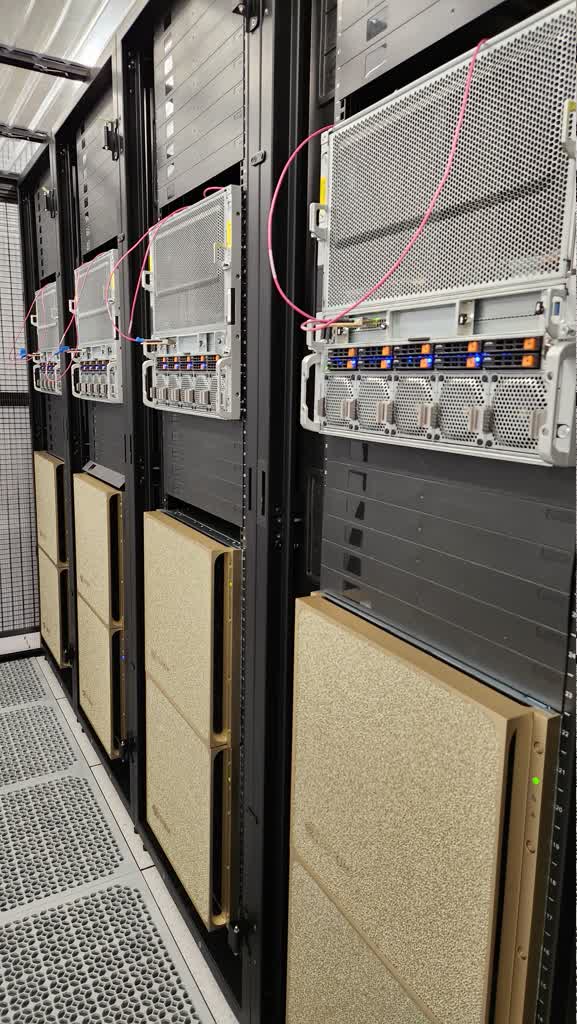
These principles have guided our approach as we've expanded our computing capacity, recently receiving a large shipment of NVIDIA Blackwell GPUs with more on order to support our rapid growth. You can see how this funding injection will be put to good use.
To our customers who have trusted us with their production workloads: thank you. We're just getting started as we continue building the infrastructure that powers the next generation of AI applications.
Follow us on X (formerly Twitter) and LinkedIn to stay updated on our journey. We look forward to sharing more exciting developments in the coming months.
 Build a Streaming Chat Backend in 10 Minutes<p>When large language models move from demos into real systems, expectations change. The goal is no longer to produce clever text, but to deliver predictable latency, responsive behavior, and reliable infrastructure characteristics. In chat-based systems, especially, how fast a response starts often matters more than how fast it finishes. This is where token streaming becomes […]</p>
 Multi-Turn RL: A Guide to Getting Reinforcement Learning Right<p>The first multi-turn RL run you launch will spend most of its life doing something you would not call training. You watch GPU utilization sit under half, watch a step take eleven minutes, and go hunting for a bug in your gradient accumulation. There is no bug. The trainer is waiting on rollouts. This is […]</p>
 Granite 4.2 8B API Review: Providers Compared<p>Granite 4.2 8B API Review Summary Attribute Details Creator / Type IBM, open-weights model Release Date August 25, 2026 Reasoning Yes, a reasoning model with built-in chain-of-thought Modalities Text in, text out (not multimodal, no image input) Context Window 131,072 tokens (about 197 A4 pages), with a long-context extension to 512K Size / License / […]</p>




© 2026 DeepInfra. All rights reserved.